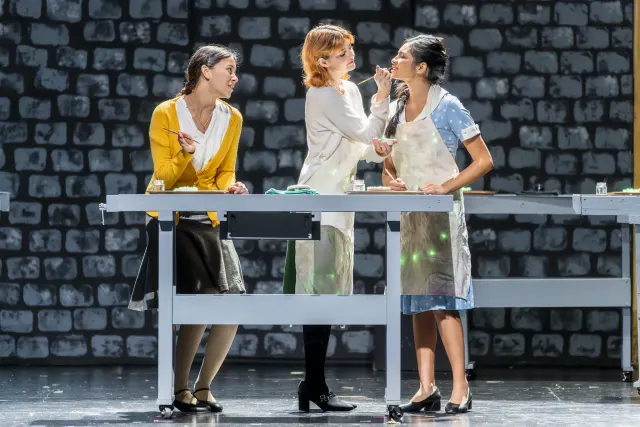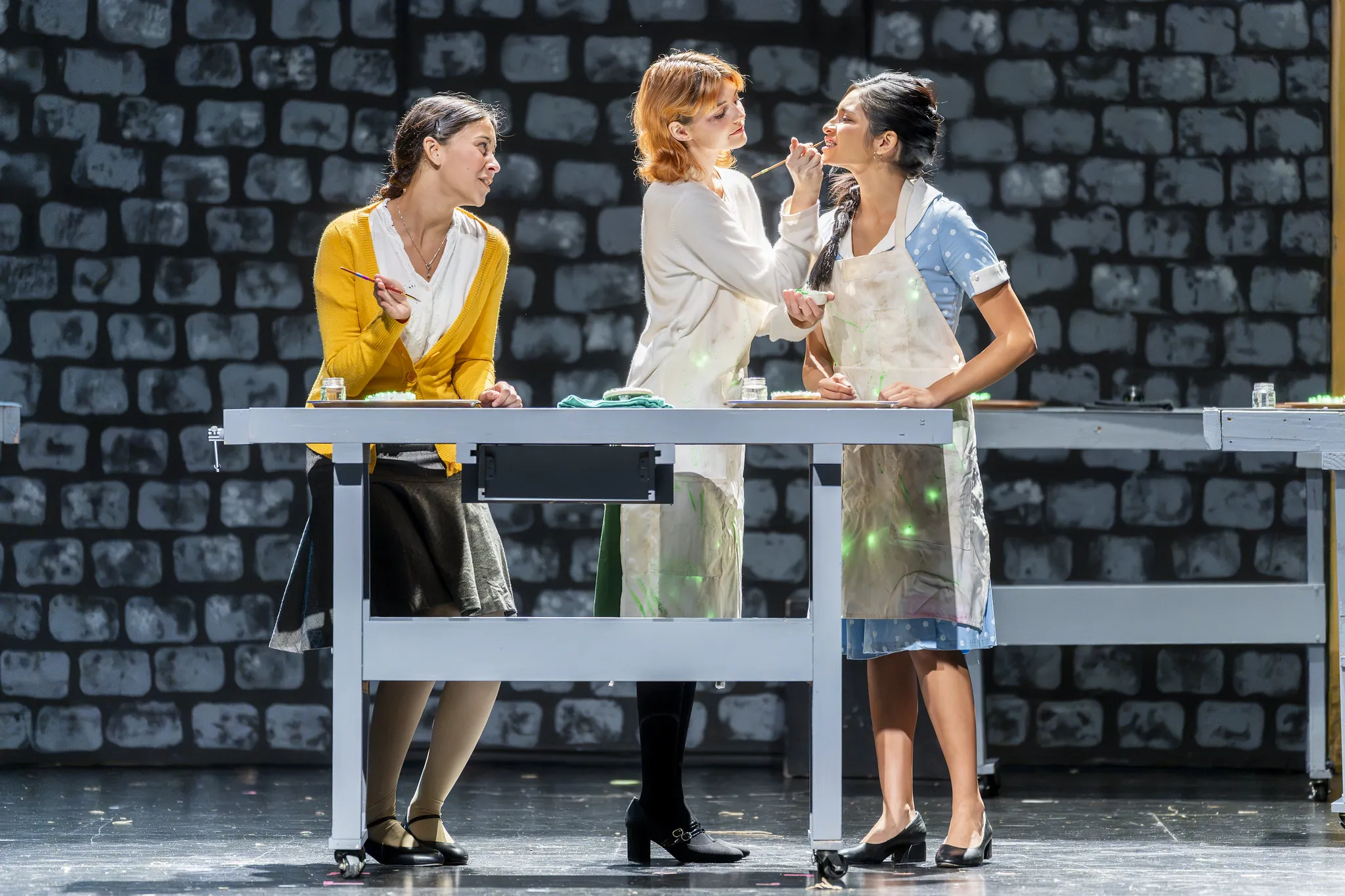
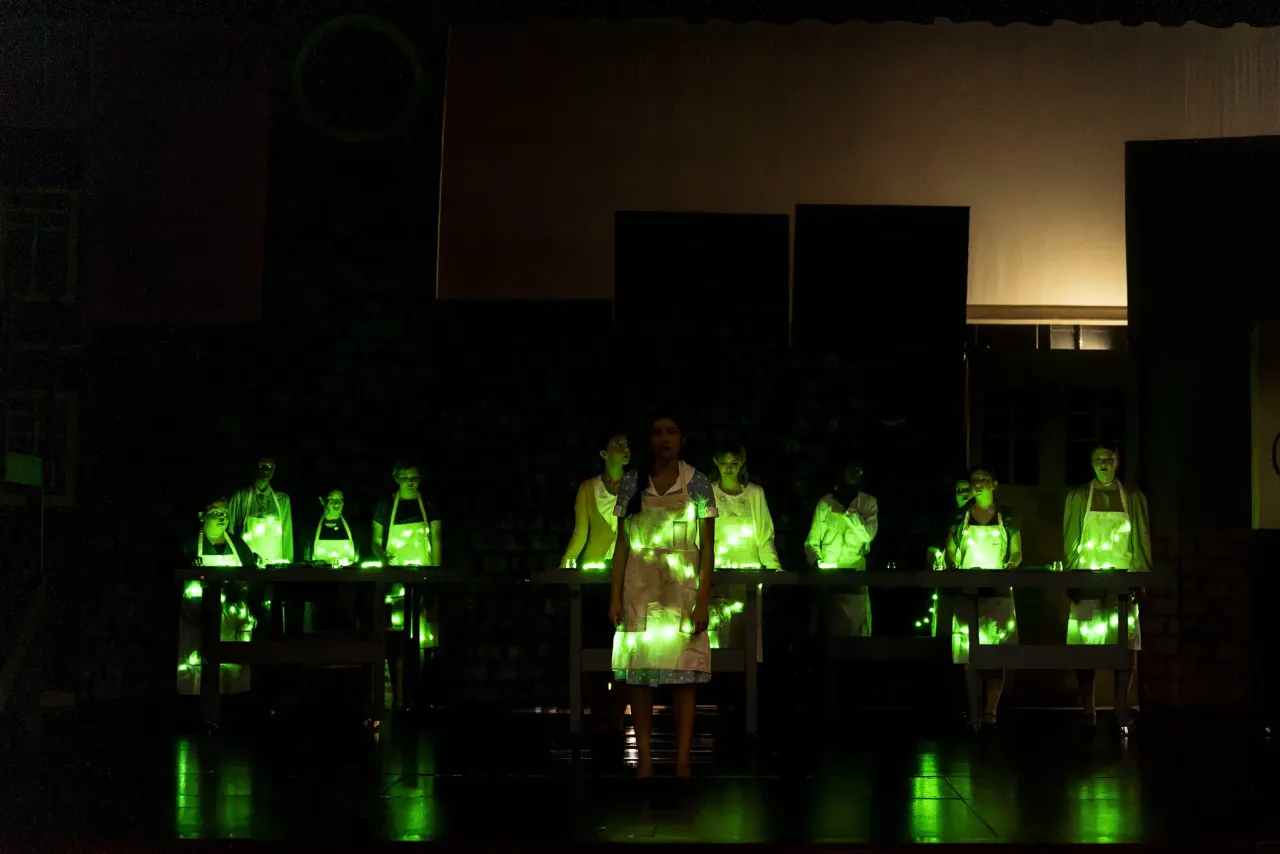
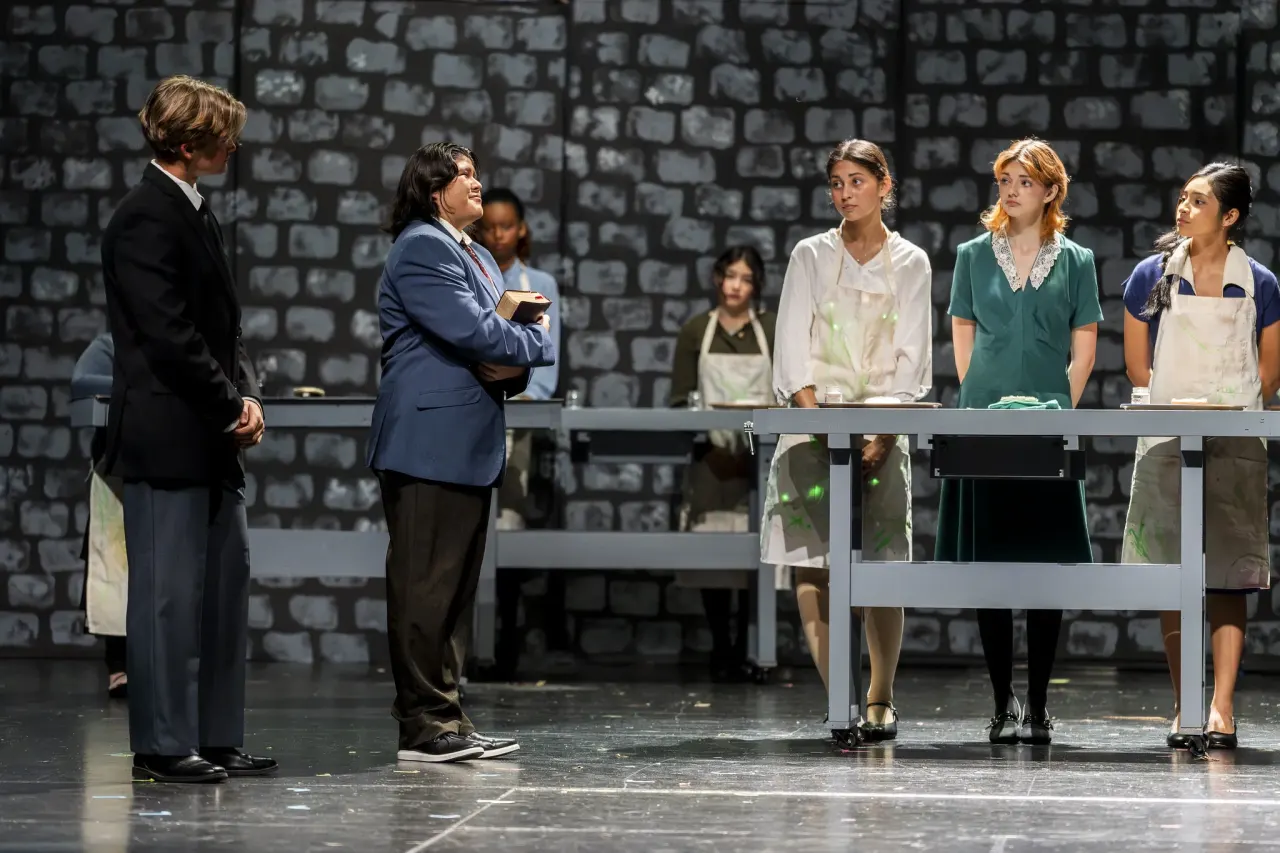
The green glow looks almost charming at first. Worn by the factory workers in Santiago High School’s production of “Radium Girls,” small LED lights give a visible presence to the luminous paint that fills their working lives. As the women grow sick, that same glow becomes harder to look at without thinking about what it represents. It is an effective visual choice in a production whose strongest performances bring the human consequences of corporate denial painfully close.
SEE ALL THE PHOTOS ON OUR FLICKR PAGE
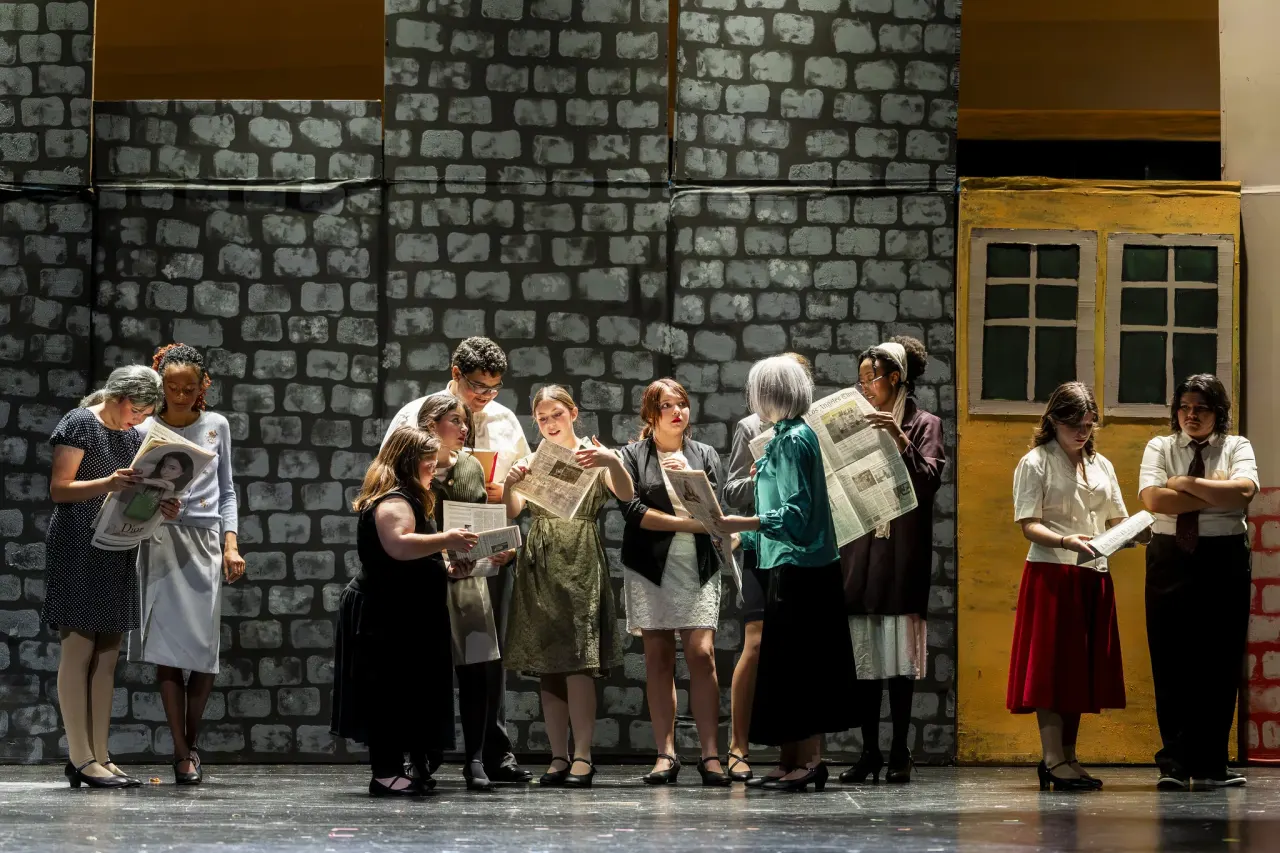
D.W. Gregory’s historical drama follows Grace Fryer, a young woman who painted watch dials with radium-based paint, as she struggles to hold her former employer accountable for her deteriorating health. Set against an era of enthusiasm for radium and its supposed benefits, the story follows workers who trusted that their jobs were safe and the people who resisted acknowledging the evidence otherwise. Under director Aloura Mgbeke, Santiago High’s production brings that history to the stage in Corona, with Madison Dominguez as Grace, Jack Koranda as company executive Arthur Roeder and Willow Depew as fellow worker Kathryn Schaub giving the conflict its emotional force.
 Stephen Day
“Their story reminds us of the importance of speaking up, standing up for what is right, and holding others accountable for their actions,” said Mgbeke.
 Stephen Day
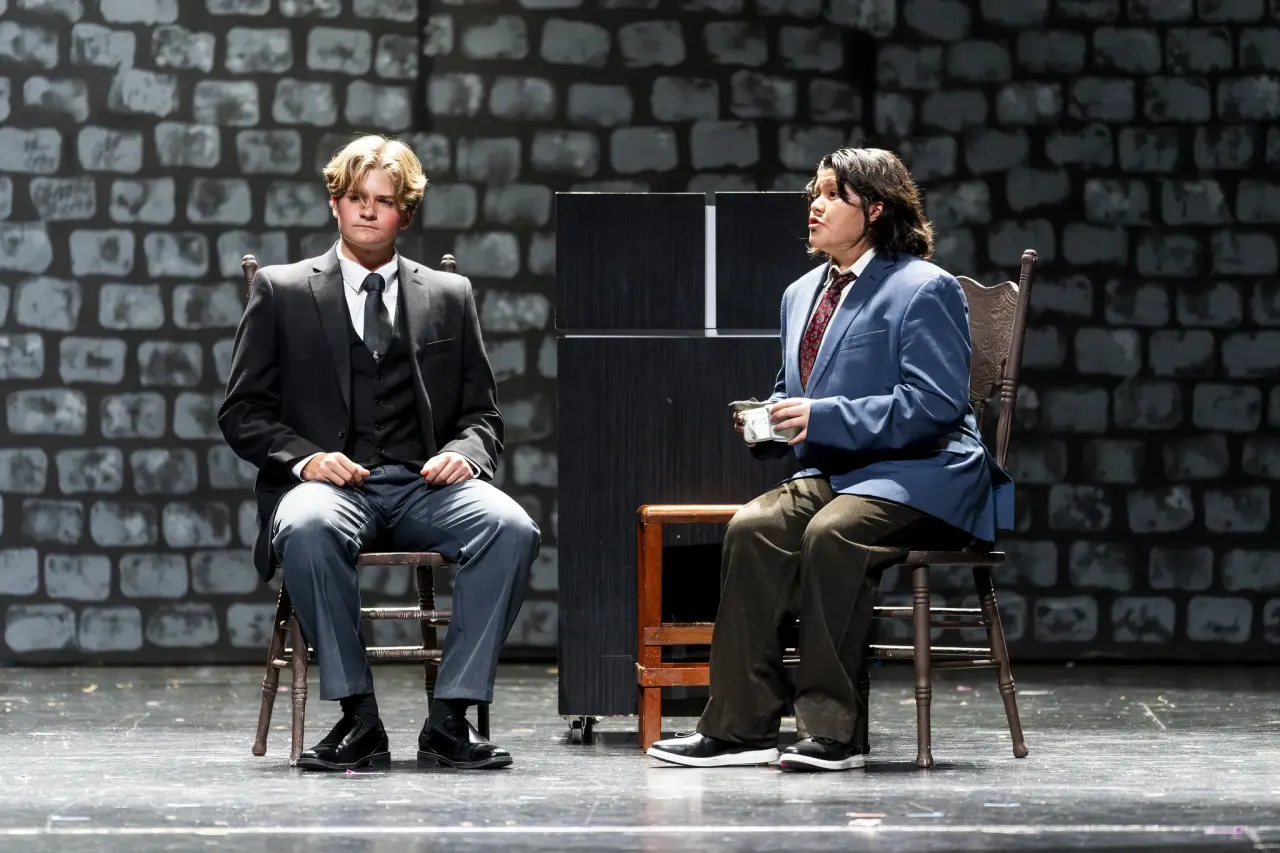
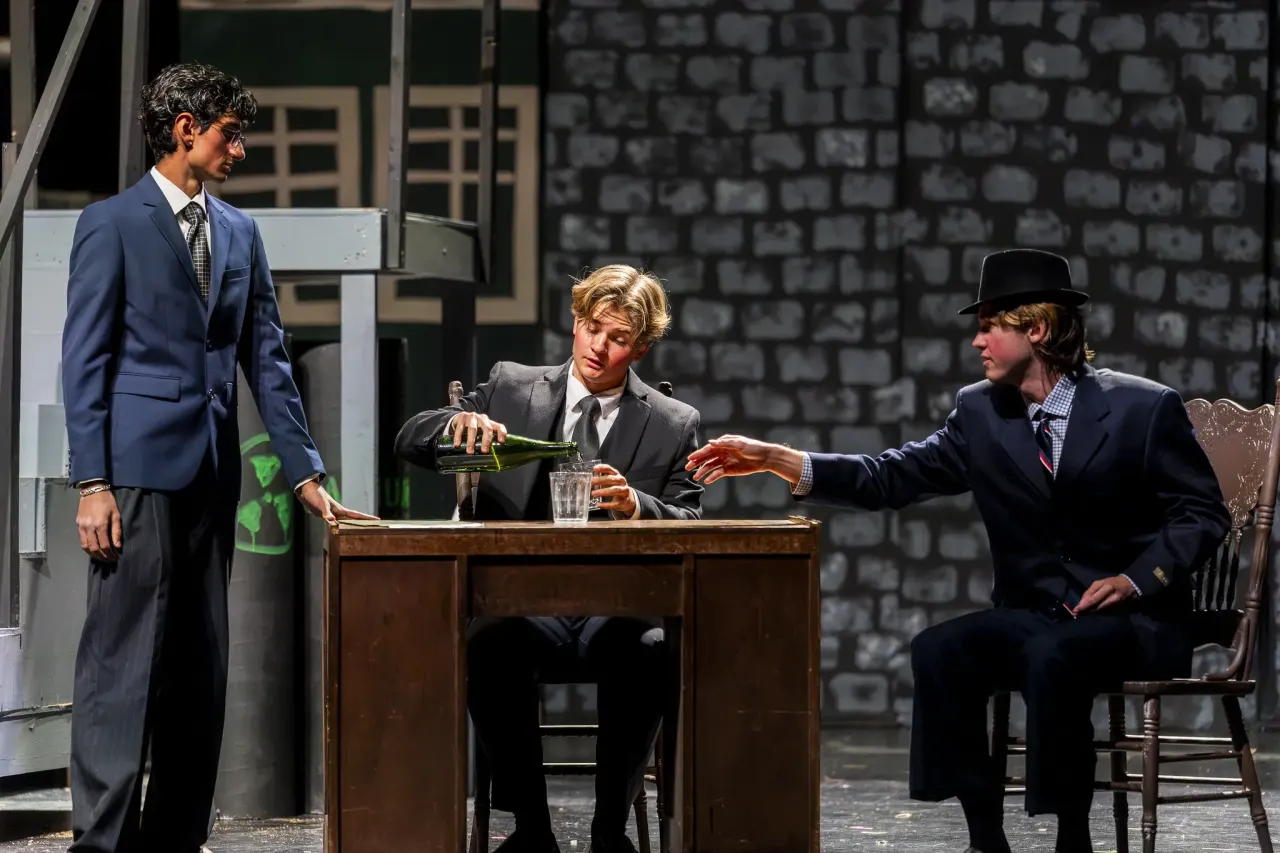
Koranda delivers a particularly compelling performance as Roeder, carrying the character through a transformation that feels believable at every stage. He begins as a businessman convinced that his work serves a purpose, supplying a product that supports the war effort. As evidence of the harm accumulates, that confidence gives way to protecting his money and concealing his missteps. Koranda makes the progression feel genuine, allowing the audience to follow how Roeder’s investment in being right becomes an unwillingness to accept responsibility.
“We hope this performance leaves you thinking, questioning, and inspired to stand up for what is right, even when it is difficult”
By the time guilt overtakes him, Koranda has established enough of the man’s earlier convictions for their collapse to carry weight. His final portrayal of someone who has lost everything grows out of the choices we have watched him make. There is something unsettling about how recognizable that journey becomes: each attempt to protect himself makes it harder to confront the damage, until he can no longer escape it.
 Stephen Day
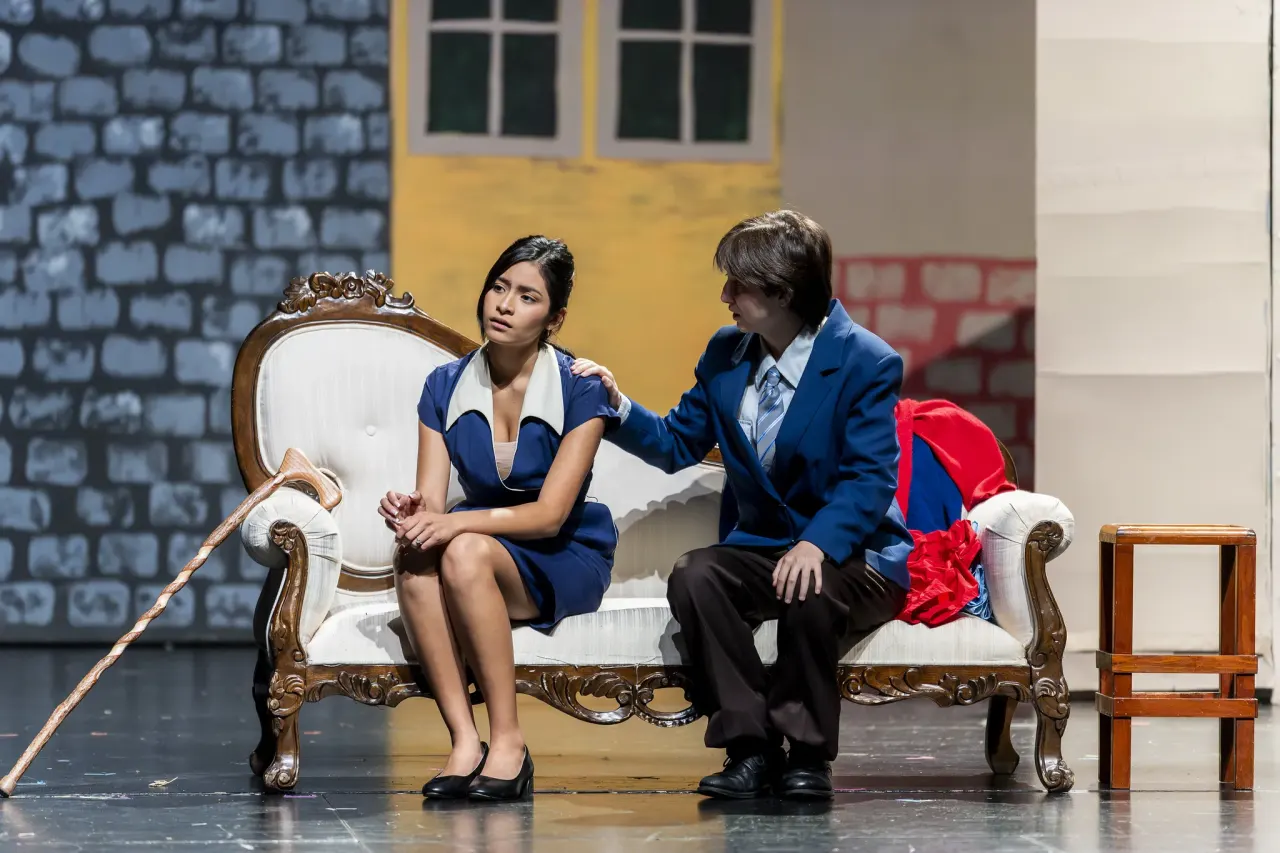
Dominguez gives Grace an equally convincing progression, balancing her physical deterioration with the frustration of having to fight for recognition of what is happening to her. Her performance makes clear how exhausting that struggle becomes when even the people closest to Grace want something from her that she can't give. Her mother, Mrs. Anna Fryer, played by Kalaya Young, dismisses her concerns, while her fiancé, Tom Kreider, played by Charlie Rush, wants them to move forward with their lives. Grace is left trying to make others understand that her illness has already changed the future they imagine for her.
 Stephen Day
Dominguez carries those competing pressures into Grace’s confrontation with a corporation that can afford to wait. The company has time and resources to draw out the dispute while her opportunity to obtain compensation slips away. Her growing frustration feels grounded in that imbalance, and the performance gives the legal struggle a personal urgency. Every delay takes something from a woman whose health is already failing.
 Stephen Day
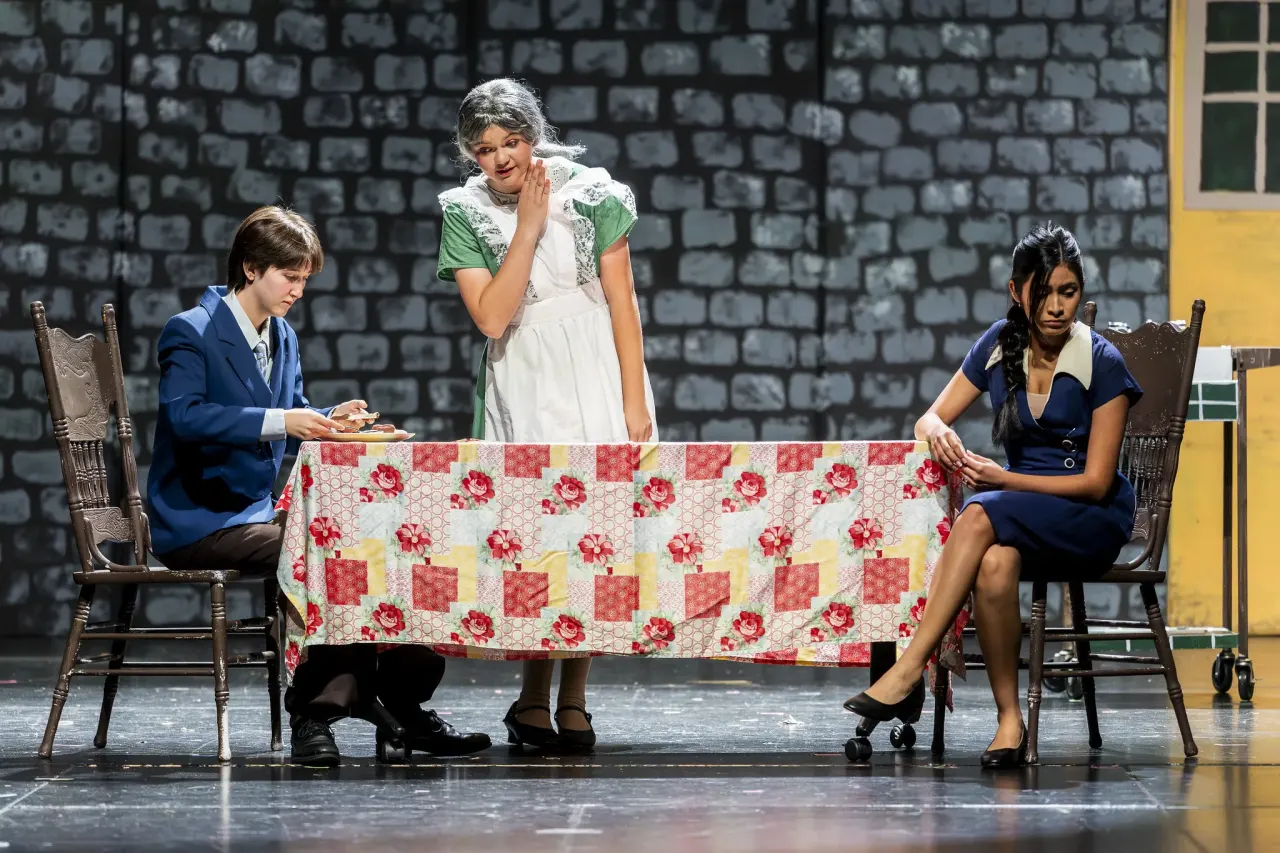
Depew’s Kathryn makes the consequences of that delay especially difficult to ignore. Her decline unfolds across several scenes, where various symptoms of radium sickness take hold, and eventually is forced to use a wheelchair. Depew makes those stages register, allowing the audience to see how much illness has taken from someone they have come to know. Her performance brings a sense of mounting loss to the production and gives Grace’s determination an additional emotional weight.
 Stephen Day
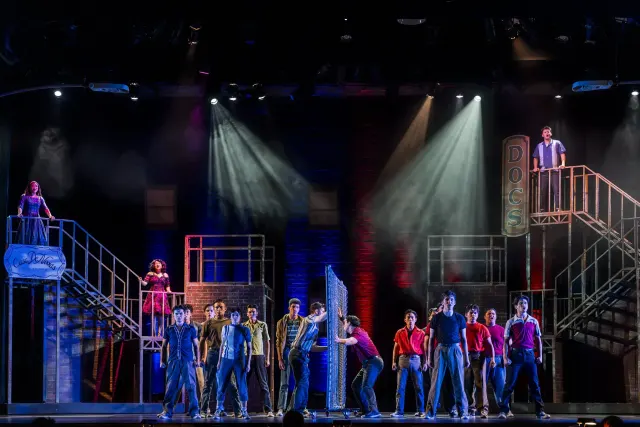
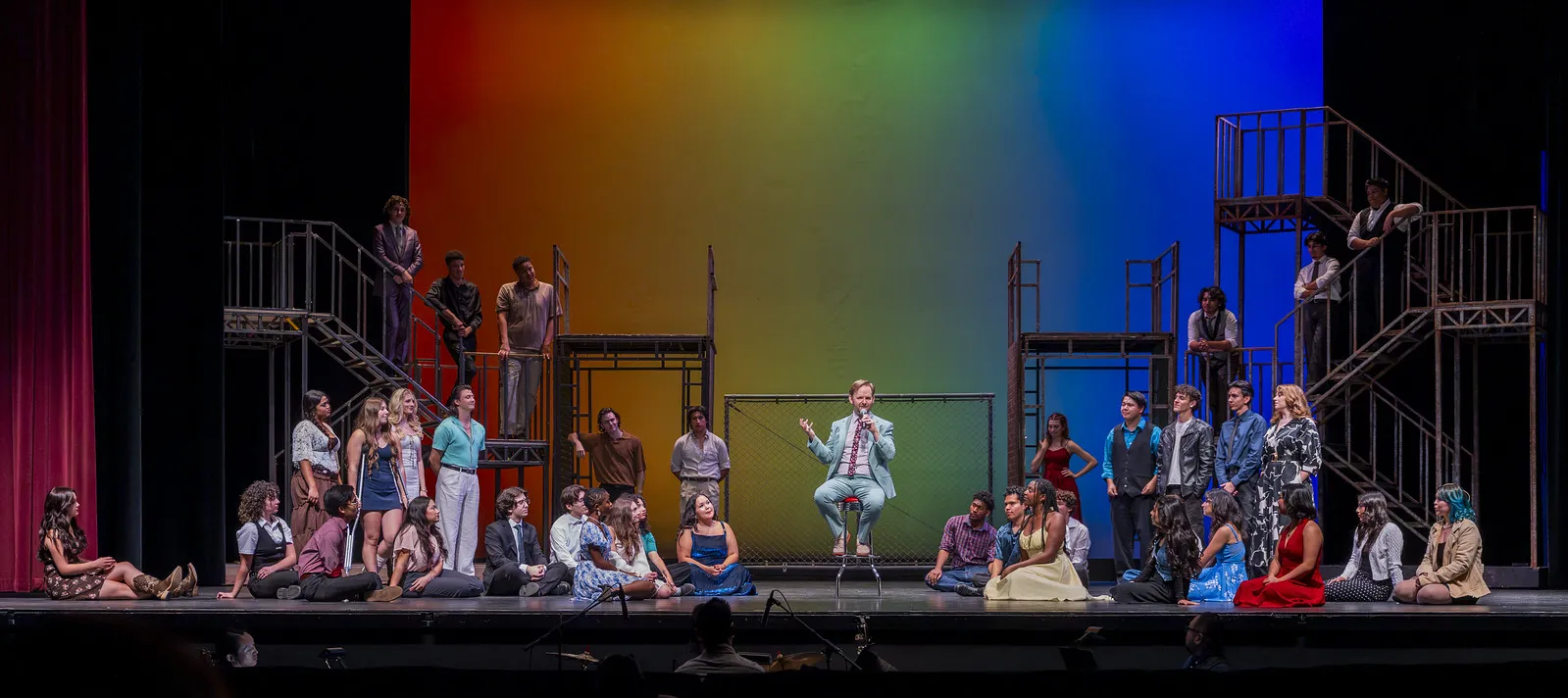
The staging supports those performances with a clear sense of place. Santiago High’s beautiful theater offers an impressive stage and lighting system, and the production makes good use of the space as the action moves between the factory floor, the surrounding town and family living rooms. The sets establish those different environments believably, connecting the women’s working lives to the homes and relationships affected by their illnesses. The green lights give the danger a tangible presence within those spaces, accompanying the women whose trust in their work has left them vulnerable.
 Stephen Day
That intention finds its strongest expression in the care these performers bring to their characters’ changing circumstances. Dominguez gives Grace’s fight conviction and frustration, Depew makes Kathryn’s decline hurt, and Koranda follows Roeder’s self-justification through to its devastating consequences. Together, they make a story about corporate responsibility feel deeply personal, grounded in the lives of people who trusted the promises made to them and paid for that trust.
“Radium Girls” runs Nov. 12 and 13 at 7 p.m. and Nov. 14 at 2 and 7 p.m. at Santiago High School, 1395 E. Foothill Parkway in Corona. Tickets are $10 with ASB and $12 without ASB, with advance purchases available at santi.booktix.com.