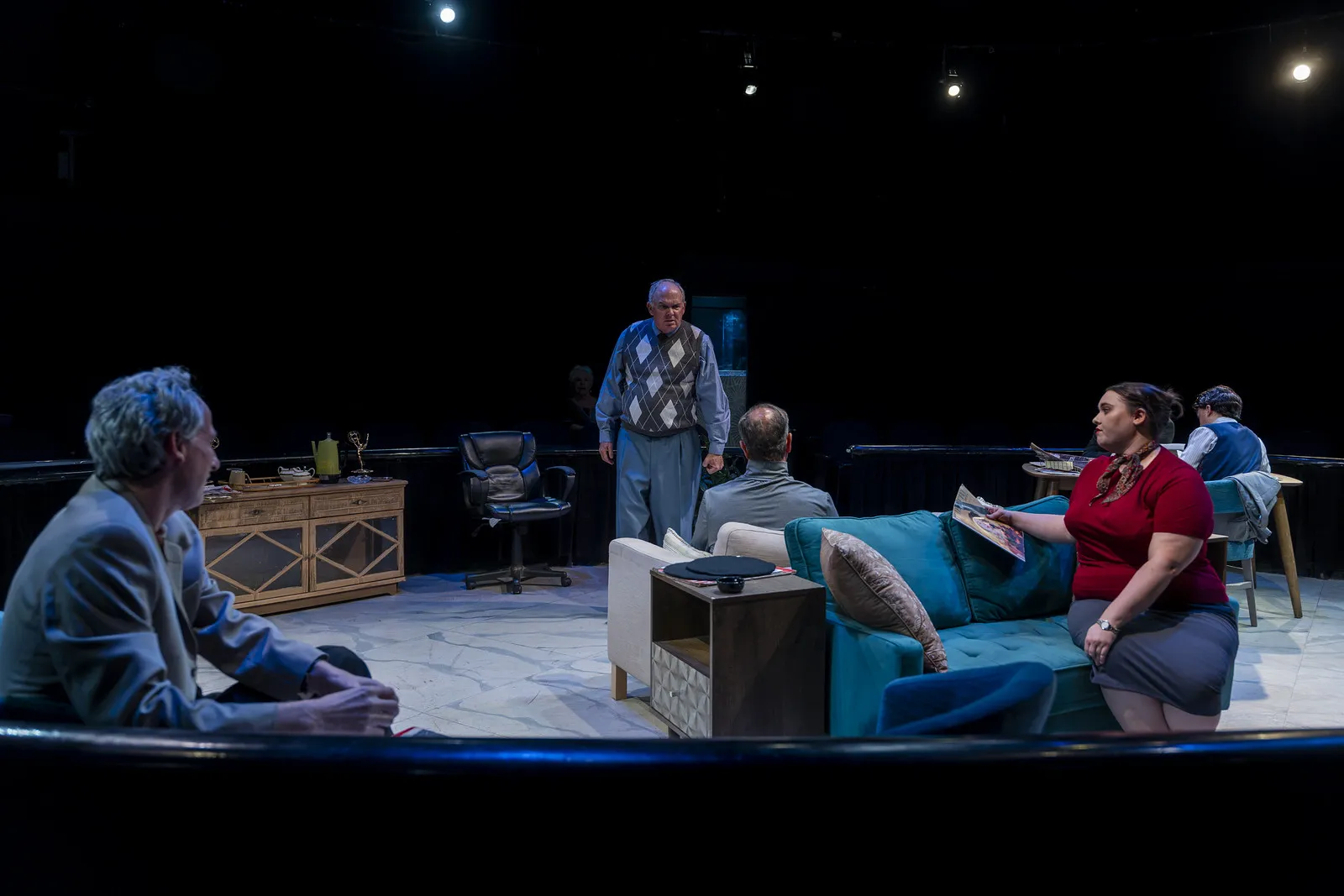
There are dysfunctional workplaces, and then there is the writer's room on the 23rd floor...
Riverside Community Players kicks off its 102nd season with Neil Simon's Laughter on the 23rd Floor, a fast-movie comedy filled with huge personalities, with even bigger egos that bruise easily, creative disagreements, and enough insults to bury the average human resources department in a mountain of paperwork. Under the direction of Toni Lynd, all that chaos comes together as something surprisingly heartwarming. The people may drive each other completely insane, but somewhere between the arguments, jokes, and rapid-fire one-liners, they have become a family.
SEE ALL THE PHOTOS ON OUR FLICKR PAGE
Loosely inspired by Simon's own experiences as a young television writer, Laughter on the 23rd Floor takes the audience inside the writers' room of a popular 1950s television comedy program. Simon fictionalizes himself as Lucas, a young writer entering his first professional writing job and suddenly finding himself surrounded by some of the funniest, strangest, and most intimidating people in the business.

 Stephen Day
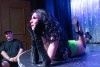
Tedy Setlak plays Lucas with the right blend of uncertainty and fascination, and as the newcomer in the room, he provides the audience with an entry point into this strange little world. Lucas is still trying to figure out his place among the collection of writers who seem perpetually at odds with one another, yet somehow compliment each other perfectly. They argue, insult each other and regularly descend into chaos, but underneath it all is the unmistakable feeling that these people would do just about anything for each other.
At the center of that chaos is Max Prince, Simon's fictionalized version of the legendary comedian Sid Caesar, played by Michael Shane Eastman. Eastman's portrayal of Max is delightfully angry, unpredictable, and frequently completely unhinged, but he never allows him to become a caricature, or the character's enormous personality to overwhelm everyone else on stage. Max can explode at any moment, but Eastman keeps those explosions funny rather than just loud.
 Stephen Day
With a crew of oversized personalities packed into one writers' room, Laughter on the 23rd Floor could easily become exhausting, especially with Simon throwing jokes at the audience almost as quickly as his characters can deliver them. Lynd keeps the production moving at a quick pace while still giving the cast enough room for the jokes and reactions to land. The result is a controlled chaos that keeps you laughing throughout the play, but never makes you feel like you're being carpet bombed by rubber chickens.
Much of that has to do with how well the ensemble works together. Sam Kimbrall as Ira, Philip Kasinski as Brian, John Shannon as Val, Joe Solazzo as Milt, Blase Zeeb as Kenny, Vivian Gibson-Elias as Carol, and Cassaundra Sierra as Helen each bring something different, and special, to the room. More importantly, they feel like the people who have spent far too much time together. They know exactly how to irritate one another, exactly which buttons to push and underneath all the arguments and the insults, clearly they care about each other.
 Stephen Day
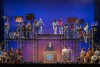
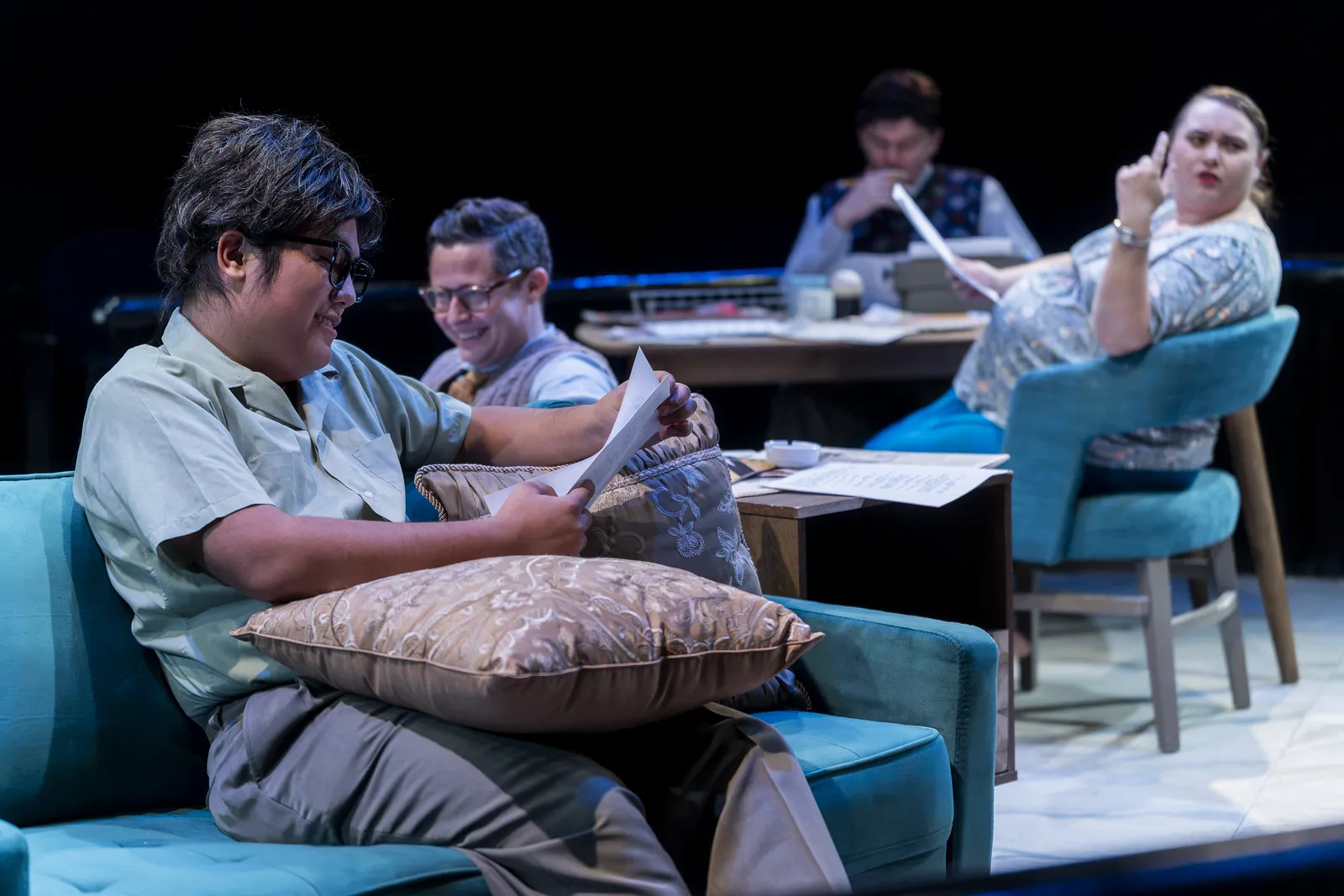
That chemistry becomes especially fun during the second act when the writers rehearse a comedy sketch that sends the room into uncontrollable laughter. The sketch itself is funny enough that when the character begin to break down, their laughter starts to feel spontaneous and there is a wonderful moment when you're not quite sure if your watching characters who cannot stop laughing, or actors who are genuinely starting to crack each other up.
If the laughter is carefully rehearsed or genuine amusement sneaking into the show it hardly matters, it's a moment that brings the audience into the room with the writers and instead of simply watching a group of comedy writers laugh at their own ridiculous jokes, you get swept up in the moment with them, sharing the joke and becoming a part of the room for a few minutes.
 Stephen Day
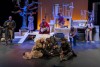
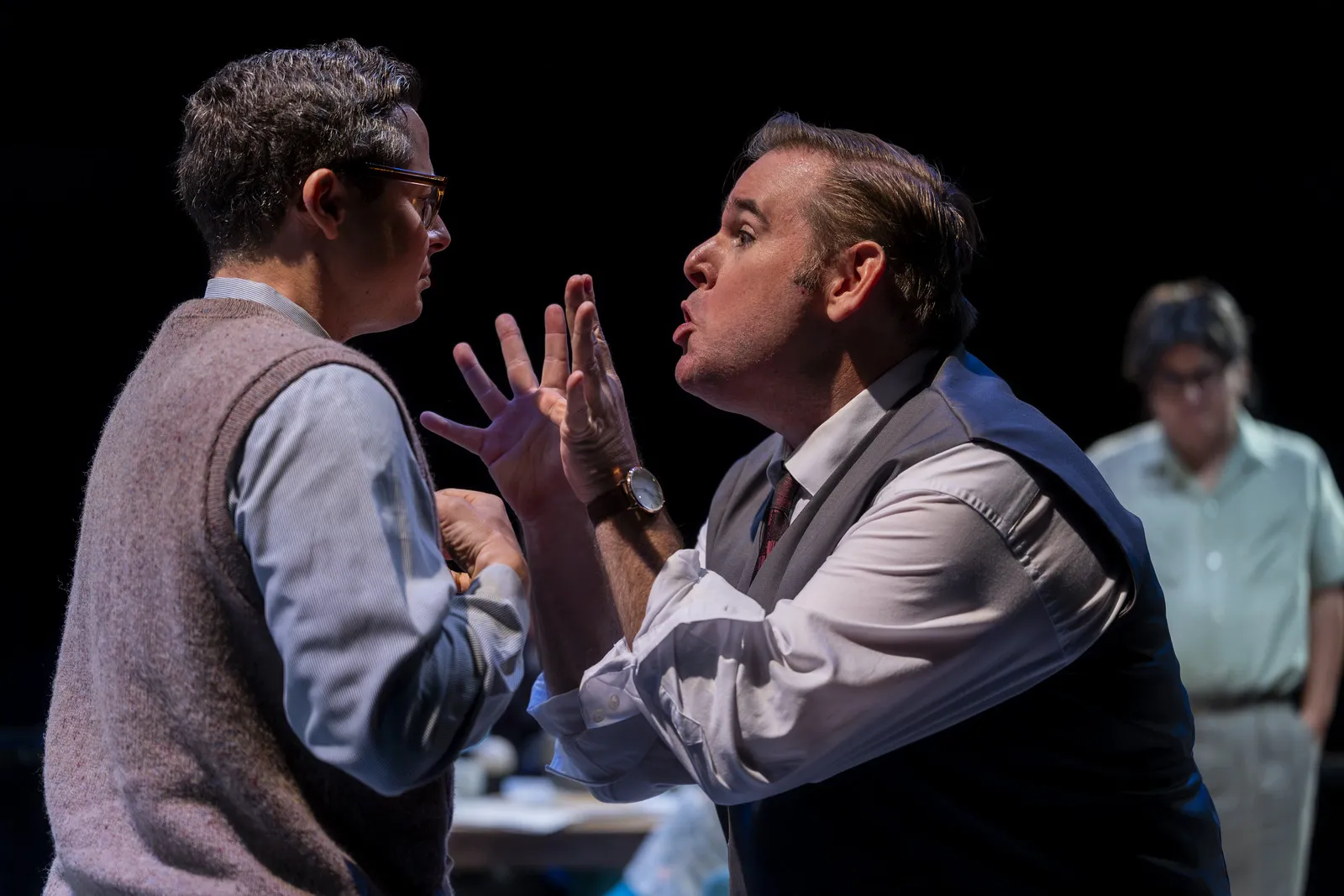
Eastman and Kimbrall get another opportunity to shine together when the increasingly volatile Max and Ira finally collide. Their confrontation erupts into some of the production's best physical comedy, with the two throwing themselves completely into a fight that becomes increasingly ridiculous. After spending so much of the evening watching Max's frustration emerge through Eastman's expressions, movements and verbal explosions, seeing all that energy finally unleashed physically is hilarious.
But the world outside the writers' room is becoming increasingly difficult to ignore.
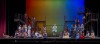
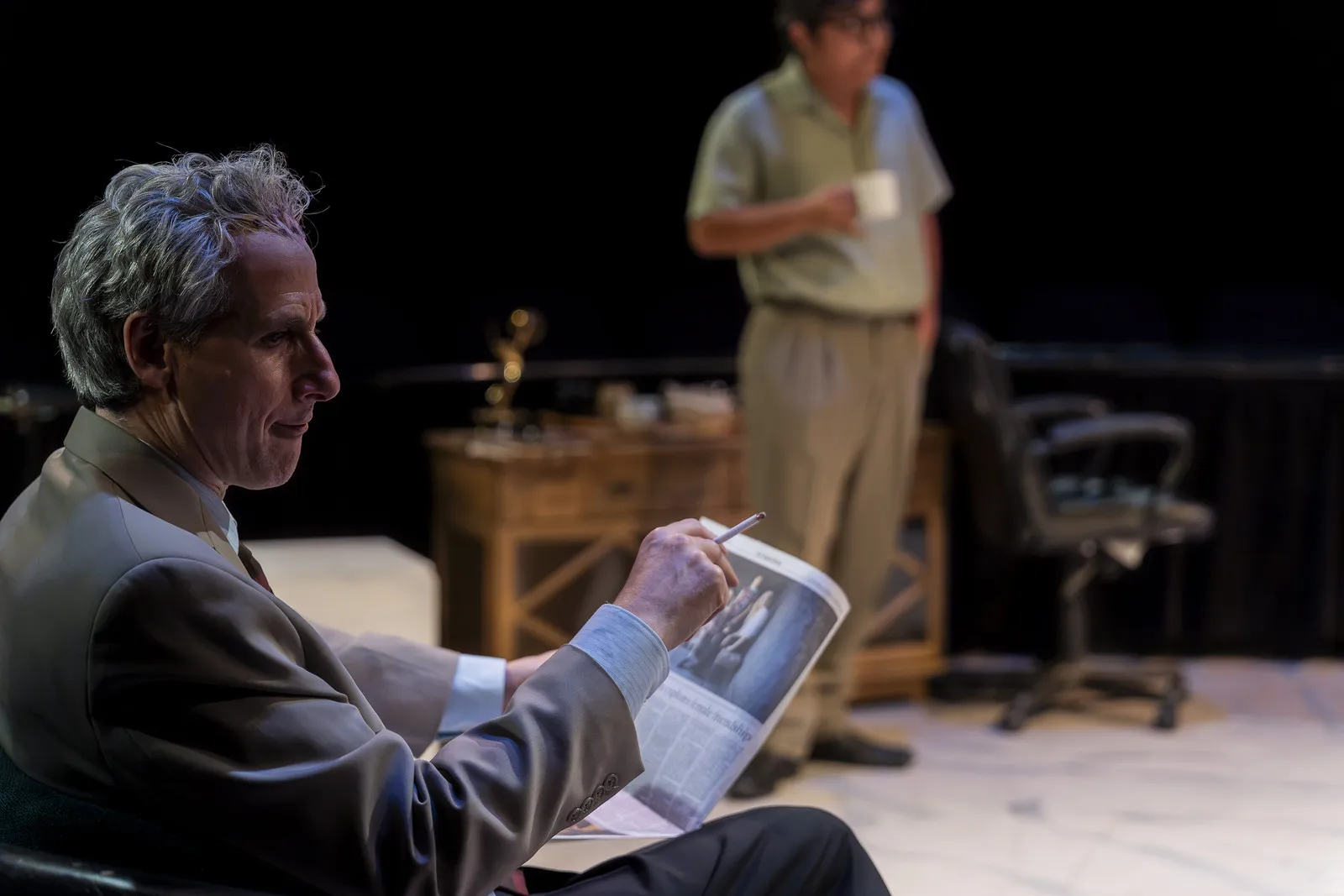
The play begins in March 1953, with McCarthyism and political paranoia hanging over the entertainment industry. Networks are nervous, sponsors want greater control and creative people increasingly understand that saying or writing the wrong thing can have consequences. Lynd keeps those politics simmering quietly underneath the comedy rather than allowing them to take over the story.
 Stephen Day
McCarthyism never becomes a flashing sign telling the audience what Laughter on the 23rd Floor is supposed to mean. Instead, it creeps into conversations and slowly adds another source of pressure to people already watching their professional world begin to change. There is just enough there to make a contemporary audience uncomfortable, particularly when some of the conversations about censorship, political pressure and creative freedom begin sounding a little less distant than something happening in a writers' room more than 70 years ago. The production trusts the audience to recognize those parallels without slapping them in the face with a morality tale.
As the play moves forward seven months and eventually reaches Christmas Eve, the possibility that this strange little family might not always have the 23rd floor becomes increasingly real. What began as a comedy about eccentric writers trading insults gradually becomes something much more affectionate. For all their fighting and dysfunction, these people have built something together, and neither careers nor creative partnerships are guaranteed to last forever.
 Stephen Day
The final moments are genuinely touching without suddenly asking these characters to become different people. There is sadness and uncertainty, but Simon never asks them to stop being funny simply because things hurt. The sardonic humor remains, even as the reality of what they may be losing begins to settle in.
Perhaps that's why this particular group of dysfunctional kooks becomes so easy to care about over the course of the evening. Their humor isn't separate from the affection they have for one another, it is how they express it. They insult each other, fight with each other, and occasionally seem ready to strangle each other, but when the world outside that writers' room starts closing in, they laugh through the pain together.
Riverside Community Players' Laughter on the 23rd Floor is funny, warm and just uncomfortable enough beneath the surface to give all that laughter a little more weight. Lynd and her cast have created a writers' room that feels less like a workplace than a dysfunctional family, and by the end of the evening, it feels like we've been lucky enough to spend a couple of hours in the room with them.
Laughter on the 23rd Floor runs Sept. 4 through Sept. 20 at Riverside Community Players in Riverside.