
 Stephen Day
SEE ALL THE PHOTOS ON OUR FLICKR PAGE
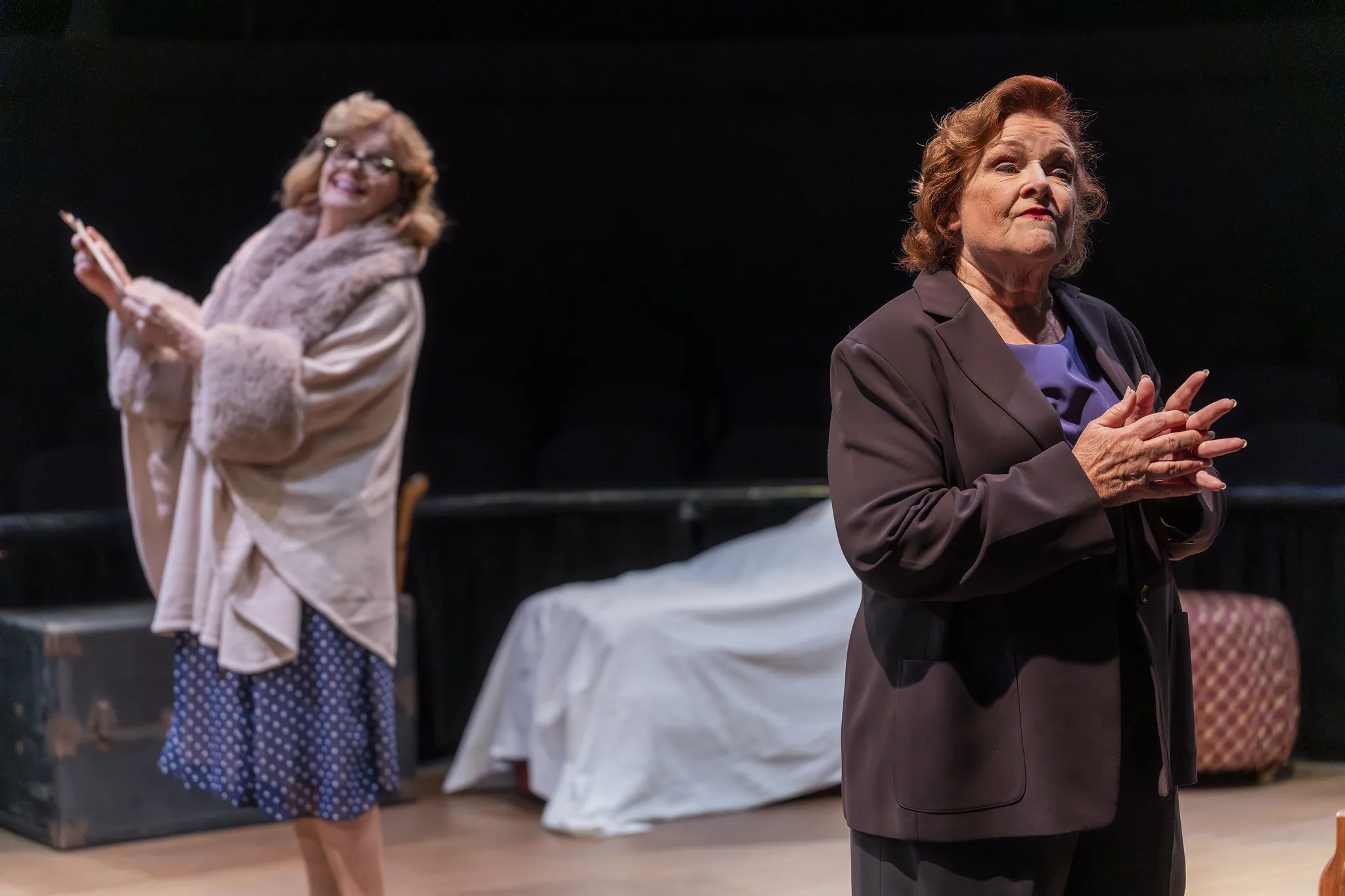
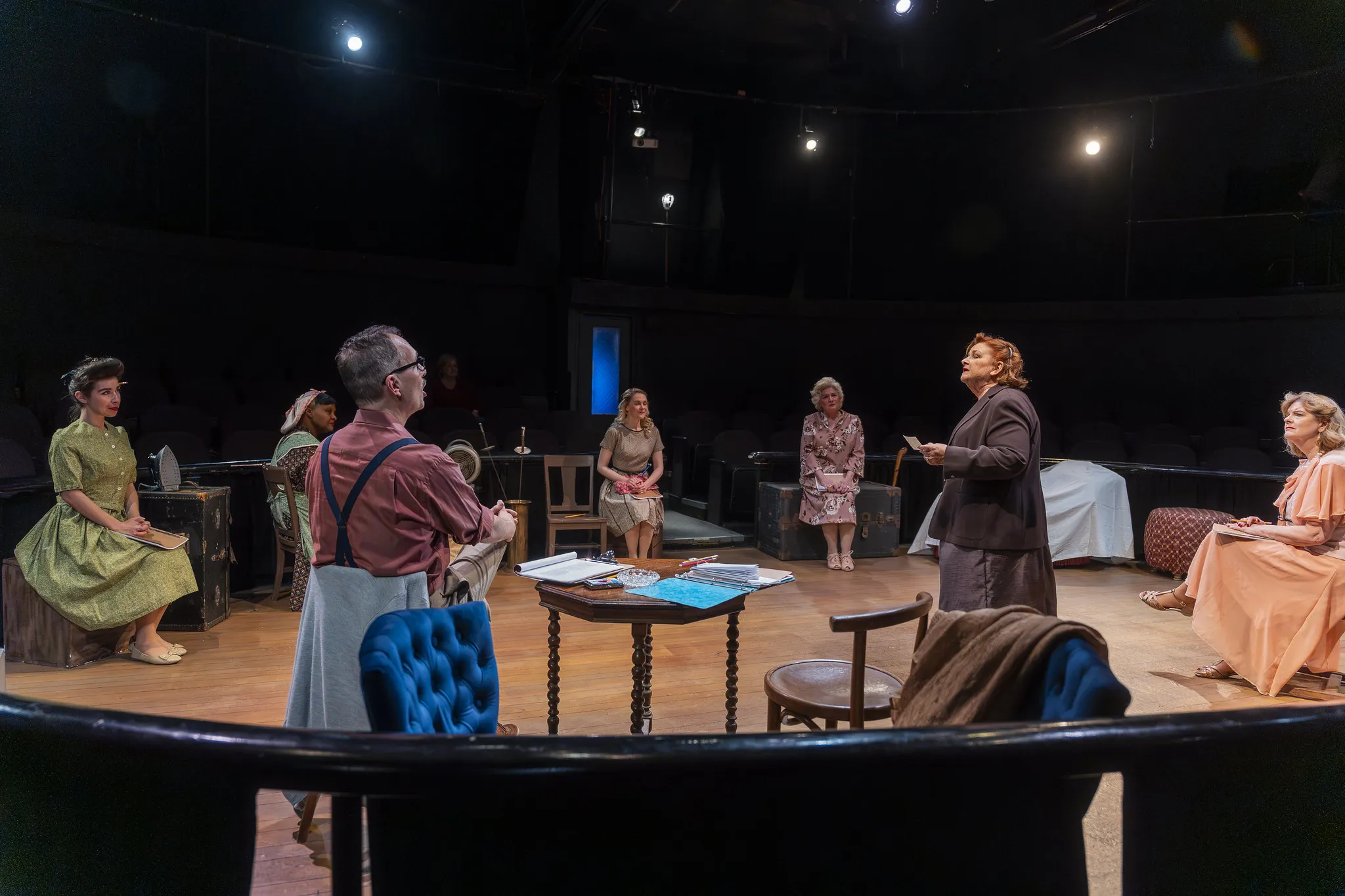
Into the Breeches! at Riverside Community Players is not just a wartime comedy about putting on a show. Under the direction of Phillip Gabriel, the production centers on what happens when a group of women take on roles they were never expected to hold and discover they do not need permission to keep them.
Set during World War II, the play follows a group of women determined to keep their theater season alive while the men are away at war. What begins as a workaround, staging Shakespeare with an all-female cast, becomes a story about confidence, authority, and ownership. This production makes that shift clear and gives each character space to reach it.
 Stephen Day
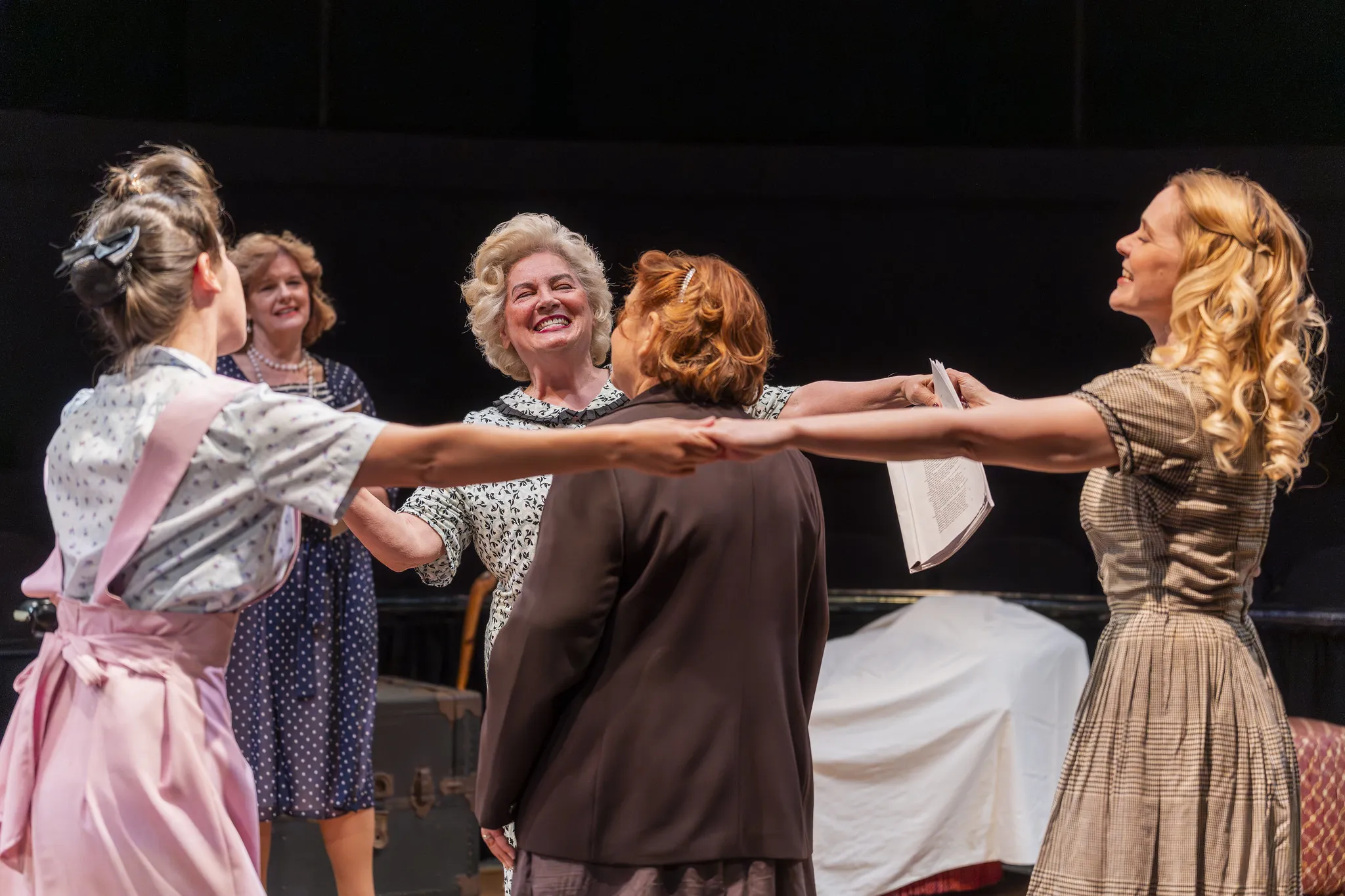
At the center is Rory Dyer’s Maggie, who carries the strongest arc in the show. Maggie begins by relying on the authority of her absent husband, repeating his ideas and using his reputation to justify her own. Dyer grounds this version of Maggie in hesitation and restraint. As the rehearsals continue, that reliance falls away. Maggie stops borrowing authority and starts claiming it. The progression is steady and built scene by scene. By the end of the play, she controls the room and earns the respect of both her castmates and the theater’s owner.
 Stephen Day
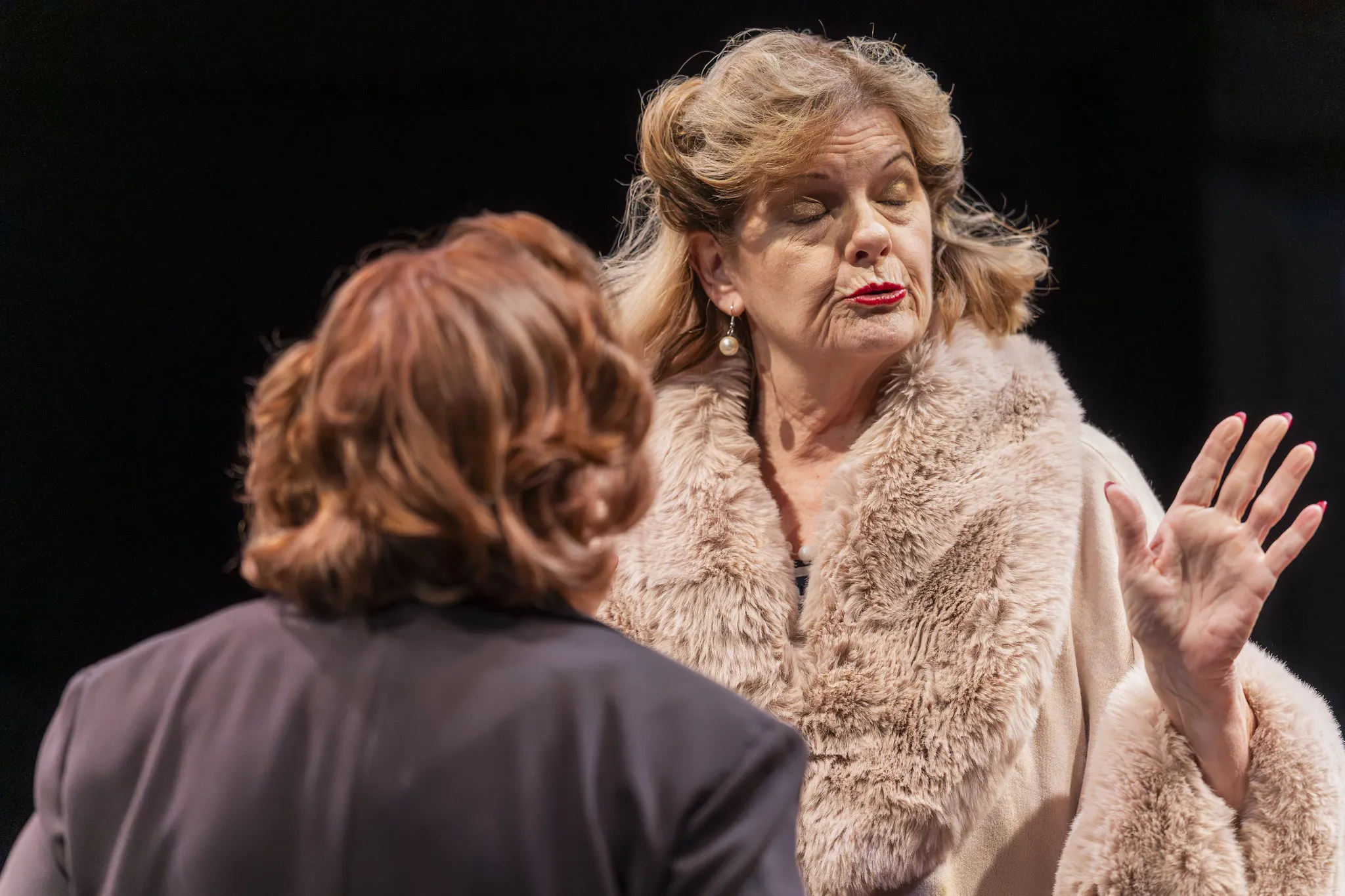
The rest of the ensemble matches that sense of growth. Lynne Ennis’ Celeste begins as the small-town theater mainstay who is in every show, expects to be in every show, and expects to lead every show, with little regard for the newer members of the ensemble. Over the course of the production, she confronts the reality that she may no longer be suited for roles like Juliet. The performance does not frame this as defeat. It becomes a conscious decision to support the next generation of actors while maintaining her own place in the craft, learning to share the spotlight rather than control it.
 Stephen Day
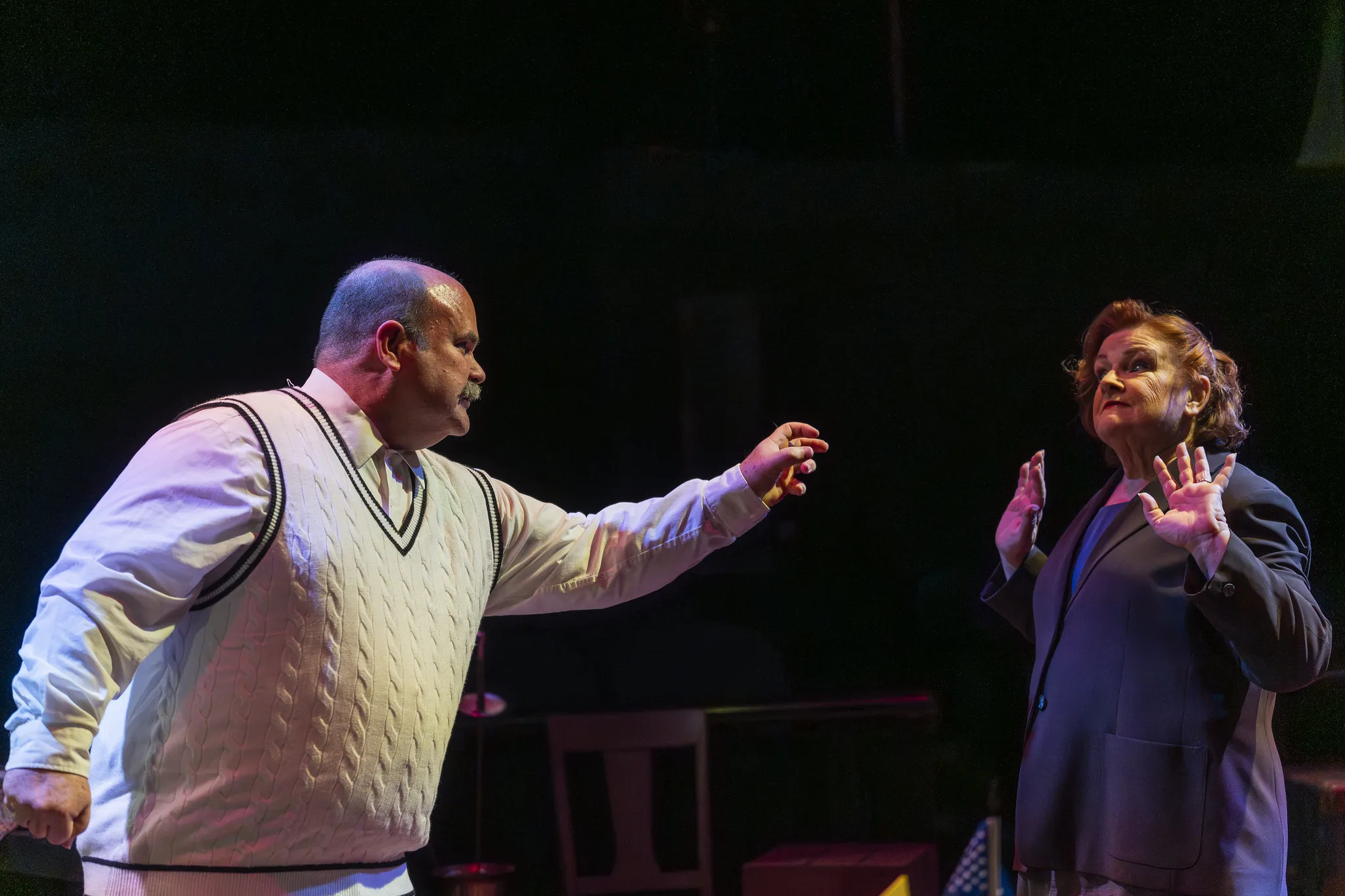
Terry Christopher brings a defined comedic edge to Ellsworth, playing him as a curmudgeon, with a comedic edge, whose position as the wealthy businessman in charge of the theater allows him to set the rules and establish firm boundaries. His resistance and each successive acceptance to Maggie’s demands displays his struggle of seeing the theatre as a money maker and his loyalty to his wife, Winifred. That relationship drives his eventual willingness to change, giving the character a consistent throughline rather than reducing him to comic relief.
 Stephen Day
Christopher Diehl’s Stuart delivers one of the most effective moments in the production. His coming out scene is direct and controlled, allowing the emotion to come through without exaggeration. The response from Winifred, played by Ginny Harman, gives the scene its impact. Harman’s performance stands out for its honesty. She plays Winifred as someone who does not understand everything happening around her but is open enough to accept it. That approach keeps the character grounded and makes her reactions land.
 Stephen Day
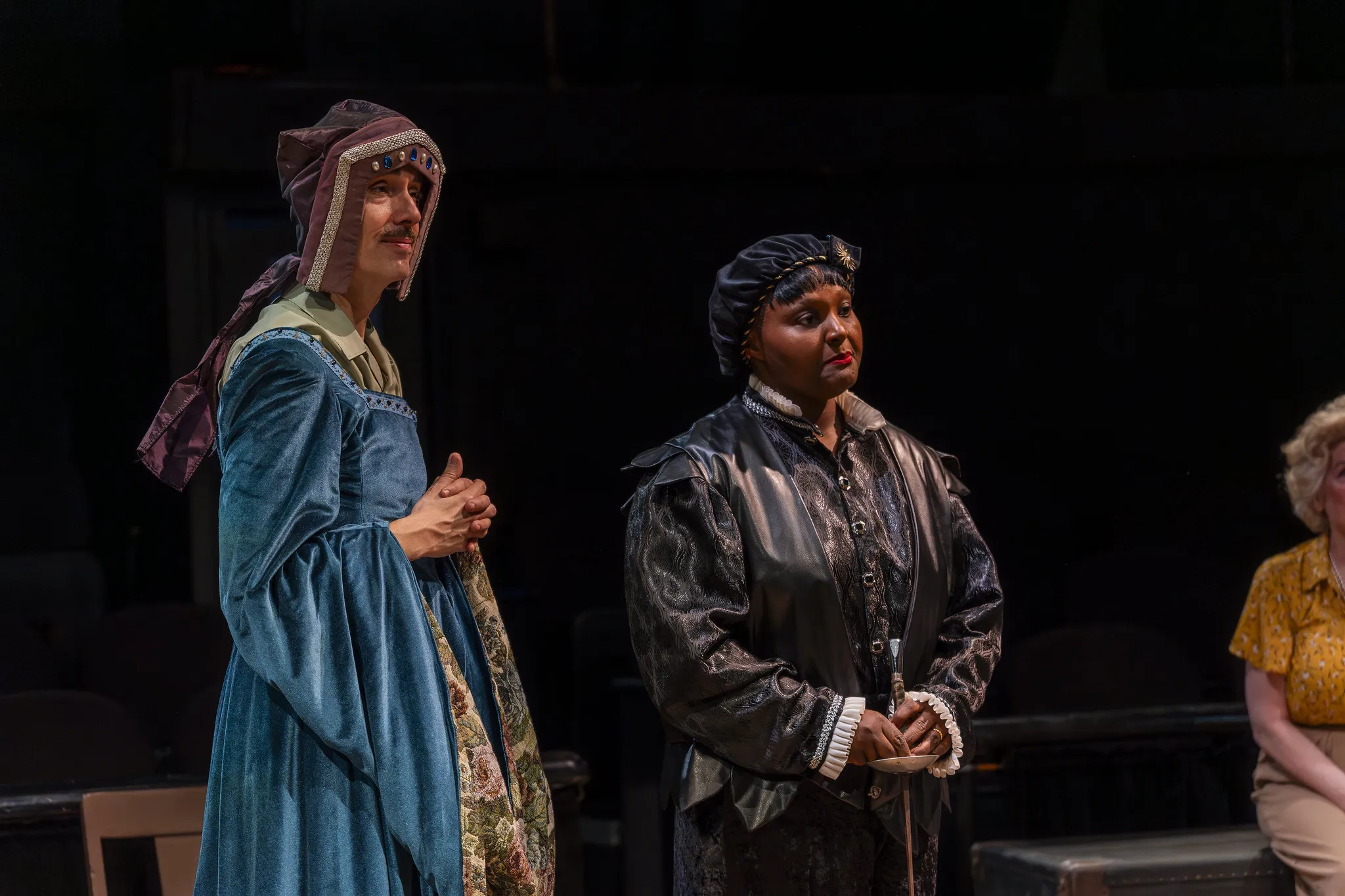
Kayla Tate’s Ida carries the additional weight of race within the story. Her fight for a place in the production is explicitly about the intersectionality of race and gender, confronting the barrier of who is allowed onstage in a space that has historically excluded actors of color. Tate handles these moments with clarity, making them part of the larger narrative without isolating them from it.
 Stephen Day
Veronique Poutre and Laurie Deards complete the ensemble with performances that track their characters’ shifts in confidence. Poutre presents a woman managing the uncertainty of a missing husband while learning to assert herself as a performer. Deards brings a sense of inexperience that makes her character’s missteps, including her reaction to Stuart, feel consistent rather than exaggerated.
 Stephen Day
The production works because it functions as an ensemble. No single performance overwhelms the others. Each character’s development supports the central idea that progress happens through collective change.
 Stephen Day
Gabriel’s direction maintains clear pacing and structure, allowing the comedic moments to land while keeping the focus on character development. The rehearsal scenes provide insight into the mechanics of theater, including details that will be familiar to anyone who has worked backstage. These moments add context without distracting from the narrative.
 Stephen Day
By the final scenes, the outcome of the play within the play is no longer the primary concern. The focus shifts to what the characters have claimed for themselves and whether they are willing to surrender it when the moment that allowed it passes. The production frames this as a question of temporary permission. These women are given space to lead because the men are gone, but once that absence ends, the expectation is that everything returns to its previous order. The play challenges that expectation. It extends the same pressure to issues of sexuality and race, refusing to treat the presence of a gay actor or a Black actor onstage as conditional. This production makes it clear that once these boundaries are crossed, the idea of returning to the old rules no longer holds.
 Stephen Day
Into the Breeches! runs April 17 through May 3, 2026 at Riverside Community Players, located at 4026 14th Street in Riverside. Tickets are available through the Riverside Community Players website at riversidecommunityplayers.com or by calling the box office at 951-686-4030. Performance times vary by date, so audiences should check the website or contact the box office directly for specific showtimes.






























Christopher
03:38 pm, Apr 16, 2026Thank you for your thoughtful, insightful review and stunning photos of our show!